

Ibama guides prepare ports, transmission lines and hydropower plants for El Niño
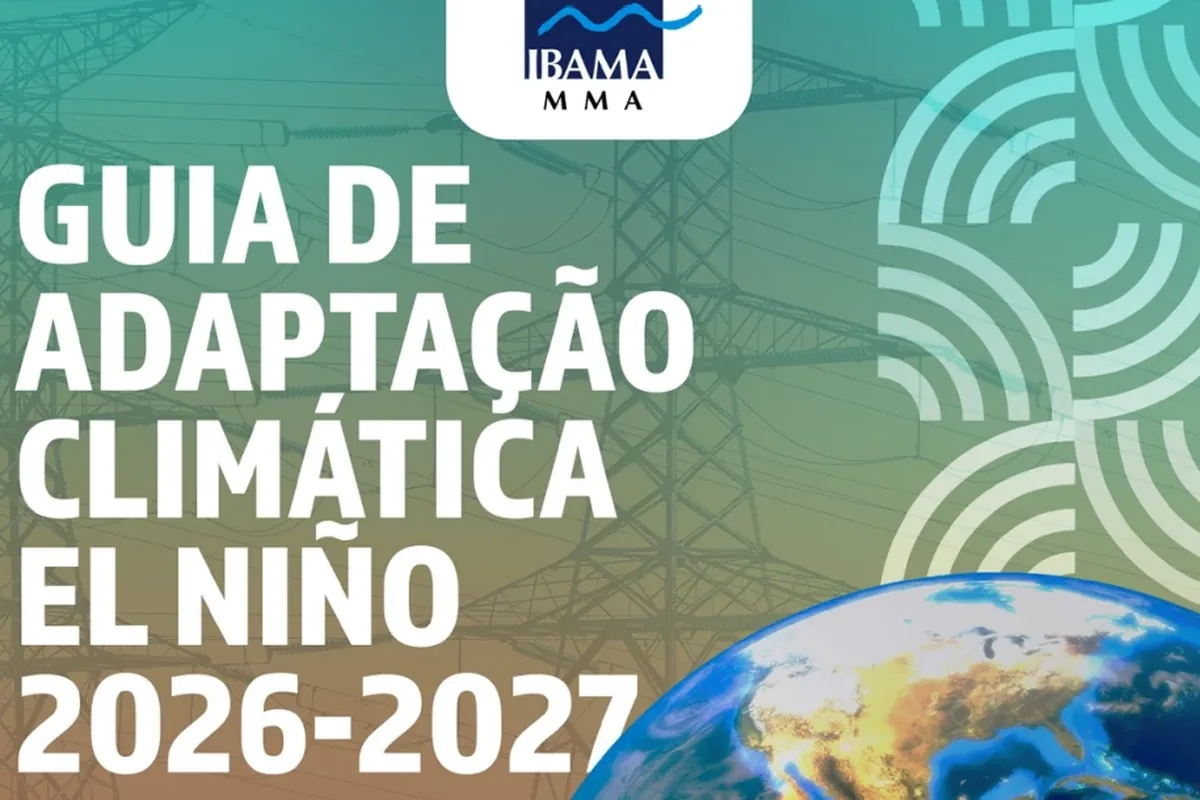
In a note dated November 5, Ibama announced three El Niño 2026-2027 Climate Adaptation Guides, aimed at transmission lines, ports and terminals and hydropower plants. The note (in Portuguese) describes the guides as orientation materials to prevent and manage the effects of what it calls a Super El Niño. The files, produced by the Environmental Licensing Directorate (Dilic), are on the Institute's publications page. For those who operate or license these projects, the message is direct: climate adaptation enters licensing before it becomes a formal obligation.
What the guides are
Each guide addresses developers and consultancies in a type of project subject to Federal Environmental Licensing (LAF): transmission lines and substations, ports and terminals and hydropower plants (large, small and mini plants), all in Portuguese. The language is operational and propositional. The text says the content anticipates what the regulation under way should require: setting guidelines on climate emergency in federal licensing is an item of Ibama's priority regulatory agenda for 2026-2027, formalized in Ibama Ordinance 76/2026. The transmission lines guide also engages with Aneel Normative Resolution 1,137/2025, on the resilience of systems to severe climate events.
The guides also say they will be complemented by guidance on mitigation, to cover both axes of the response to the climate emergency. In both, continuous monitoring of results and transparency of information throughout licensing are treated as priorities.
Why licensing
The central argument is that licensing is the only instrument of Brazilian climate policy that acts at once at the project level, with binding power over the decision to build, and by prognosis, before effects appear. For the guides, the design phase is when the cost of adjustment is minimal. The text cites the ADPF 708 ruling, in which the Supreme Court recognized the Paris Agreement as a human rights treaty, and reads the constitutional requirement for a prior impact study as also covering the project's resilience to climate change. The guides state that licensing can act even on projects already licensed, because of the supervening of serious environmental risks.
The scenario behind the guides
The guides start from NOAA, ECMWF and Cemaden projections pointing to a very strong El Niño, with a sea surface temperature anomaly of 2.0 °C or more, in 2026-2027. Equivalent events, in 1982-83, 1997-98 and 2015-16, amplified extremes in the country, and the effects vary by region and project type.
- Ports: in the three reference events, rainfall in southern and southeastern estuarine regions was 40% to 70% above average, and storm surge ran 0.5 to 1.5 meters above the predicted tide. In the Baixada Santista, 54.8% of extreme surge events occurred during El Niño, according to a cited study.
- Transmission lines: four climate factors accounted for about 43% of shutdowns from 2014 to 2023, notably lightning and wildfires, according to ONS data compiled by EPE. El Niño brings rain and floods to the South and drought, fires and heat waves to the North, Northeast and Center-West.
- Hydropower plants: hydropower accounted for about 60% of the country's electricity in 2023. The phenomenon brings droughts that cut flows and reservoirs in the North and Northeast and floods that strain spillways in the South.
The common structure
The three guides follow the same logic, in two dimensions. The first is the resilience of the territory: whether the project leaves the populations and ecosystems of the Area of Influence more or less able to face the climate. The second is the resilience of the project: whether it will be safe and viable over its lifetime in the face of current extremes and future scenarios.
To organize measures, the guides use the IPCC risk equation, in which risk depends on hazard, vulnerability and exposure. The hazard escapes the individual project, and licensing acts on vulnerability and exposure. Risk management has three stages, based on ISO 31000 and ISO 14091. Diagnosis produces the hazard inventory, the vulnerability and exposure analysis and the preliminary hazard analysis matrix (APP-Clima), with scenarios for 10, 30 and 50 years. Preparation brings together structural and operational measures and an early warning system, with the Climate Risk Management Plan (PGR-Clima). Reaction activates the Climate Emergency Action Plan (PAE-Clima) and records lessons learned. The guides require at least one full drill a year and distinguish acute events, such as a flood or a wildfire, from chronic ones, such as sea level rise or silting.
What each guide brings
In the ports guide, recommendations are numerical. For southern and southeastern ports exposed to El Niño storm surges, the guide suggests raising quay operating levels to at least 2.5 meters DATUM, protecting electrical systems up to +3.0 meters and sizing internal drainage for a return period of 100 years or more. It also suggests operating thresholds, with a wind alert at 50 km/h and crane stoppage at 60 km/h, a tide alert at +0.5 meter and suspension of berthing at +0.8 meter, and a dredging contract with mobilization within 72 hours. In an event, the Port Authority (Capitania dos Portos) must be notified within 30 minutes, and Ibama within an hour in cases of technological accidents triggered by natural events. Examples include Santos, Rio Grande and São Sebastião and international cases such as Rotterdam, Tilbury and the closure of the Port of Houston after Hurricane Harvey.
In the transmission lines guide, risks split between installation and operation. During construction, heavy rain halts earthmoving and concreting, and drought in northern rivers prevents the transport of heavy equipment. In operation, smoke from fires can cause shutdowns even without flames touching the cables, heat expands the cables at peak demand and storms topple towers and flood substations. The guide recalls the 2013 Northeast blackout, when a fire in Piauí took down two 500 kV lines and left nine states without power for up to four hours, with a load cut of 10,900 MW. Measures include tower reinforcement, lightning arresters, vegetation management and firebreaks along the right-of-way and assessing single circuits instead of double ones, a decision that depends on power sector expansion planning. The guide acknowledges that part of the topics, such as asset management, is not subject to decision in licensing.
In the hydropower plants guide, the focus is water. Floods require reviewing spillway capacity and freeboard, and droughts call for operating rules that balance generation, flood control and multiple uses. The examples are the 2024 Rio Grande do Sul floods, which led to the rupture of a hydroelectric dam and the shutdown of lines, and the historic 2023 drought on the Madeira River, which shut down the Santo Antônio plant. For the guide, the second case shows a chronic trend that could have been anticipated with long-term climate scenarios from the planning stage.
Communities, climate justice and education
The guides devote a chapter to CONAMA Resolution 511/2025, which requires Sisnama bodies, including federal licensing, to observe principles of climate justice and the fight against environmental racism. Measures should prioritize Indigenous peoples and traditional communities, Black and quilombola populations, fishers and other vulnerable groups. Recommendations include accessible participation and complaint channels throughout the project's cycle, prior, free and informed consultation protocols where applicable, hearings in accessible language, time and territory, with documented feedback on contributions, and assessing, in the EIA/Rima, disproportionate impacts on racialized groups.
The ports guide goes further and states that the port's early warning system must be the same one that alerts the communities in the Area of Influence, in real time, with Civil Defense: it is not admissible for the port to have a system for its operations while neighboring communities have no access to alerts. The guides also propose a climate component of the Environmental Education Program (PEA-Clima), continuous, with local knowledge and integrated with the warning system and the Social Communication Program.
And financing
The guides bring an annex on funding sources for adaptation. In the ports one, the basis is the Observatório do Clima's Climate Finance Primer (2026), and the instruments are the Climate Fund, Eco Invest, the Merchant Marine Fund, the National Environment Fund, the Amazon Fund and the TFFF. The transmission lines one includes, among others, the Global Reversion Reserve. The annex's diagnosis is frank. Most resources are still concentrated in mitigation and run through reimbursable credit, and non-reimbursable supply is small, which limits access for smaller projects. It is the same picture the Observatório do Clima's budget analysis shows, as in our text on the 2027 budget bill. The practical recommendations are to link each PGR-Clima measure to a funding source, prioritize grant support for studies and diagnostics and structure projects early, including qualifying them in the New PAC and PPI.
What this means for those who license
The guides are orientation and create no obligation, but they indicate the format Ibama is expected to demand. Those with a process under way or a project to license can start with four fronts: a climate diagnosis (APP-Clima) with future scenarios, integrated into the environmental study; the management and emergency plans (PGR-Clima and PAE-Clima), with defined trigger thresholds; the warning system shared with Civil Defense and communities; and the mapping of funding sources for each measure. The guides also set a calendar: pre-season inspection, in June for southern and southeastern ports, and inspections before the dry season in the Center-North and storms in the South.
Talk to KICK
KICK Group works on the social side of licensing, with stakeholder mapping, social communication and environmental education programs and community engagement, among the points the guides place at the center of adaptation. If your project needs to incorporate climate risk into licensing, it is worth talking.
Write to contato@kickgroup.com.br. Sources: Ibama note (11/5/2026), Ports and Terminals Guide, Transmission Lines Guide and Hydropower Plants Guide, all from Ibama's Environmental Licensing Directorate (in Portuguese). This text is informational, Ibama may update its guidance and it was updated as of November 6, 2026.
Keep reading
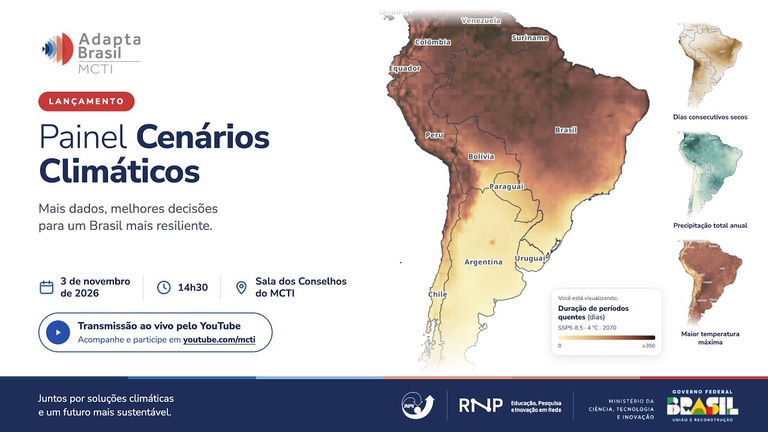
AdaptaBrasil brings 10 km climate scenarios to Latin America
The new MCTI, INPE and RNP panel shows temperature and rainfall projections for 1.5, 2, 3 and 4 °C of warming. See what changed, the indicators and what it means for projects and licensing.

KICK develops ESPM's first Sustainability Report
The report, with 2025 data, uses the GRI Standards as a reference and relates to MEC assessments, the Ethos Indicators and the SDGs. See how it was developed and what it shows.
Letter at COP31 calls for political leadership to end deforestation by 2030
More than one hundred organizations, Indigenous peoples and research institutions call for an implementation process through 2030 and an international meeting in 2027. See what the letter says, the COP30 Roadmap and what changes for companies.