

Brazil submits its Fifth National Communication and Second Transparency Report to the UN at COP31
On Tuesday, November 17, Brazil submitted its Fifth National Communication and Second Biennial Transparency Report to the UN Climate Change Convention (UNFCCC), combined in a single document. The submission was made during COP31 in Antalya, Türkiye. According to the Ciência&Clima project, which supports the Ministry of Science, Technology and Innovation (MCTI) in preparing these reports, Brazil is the fourth country in the world to submit under the second transparency cycle of the Paris Agreement. The document includes the official emissions inventory updated to 2024, showing a 27% drop in two years. For anyone preparing a corporate inventory or a project study, this is now the country's official reference.
What was submitted
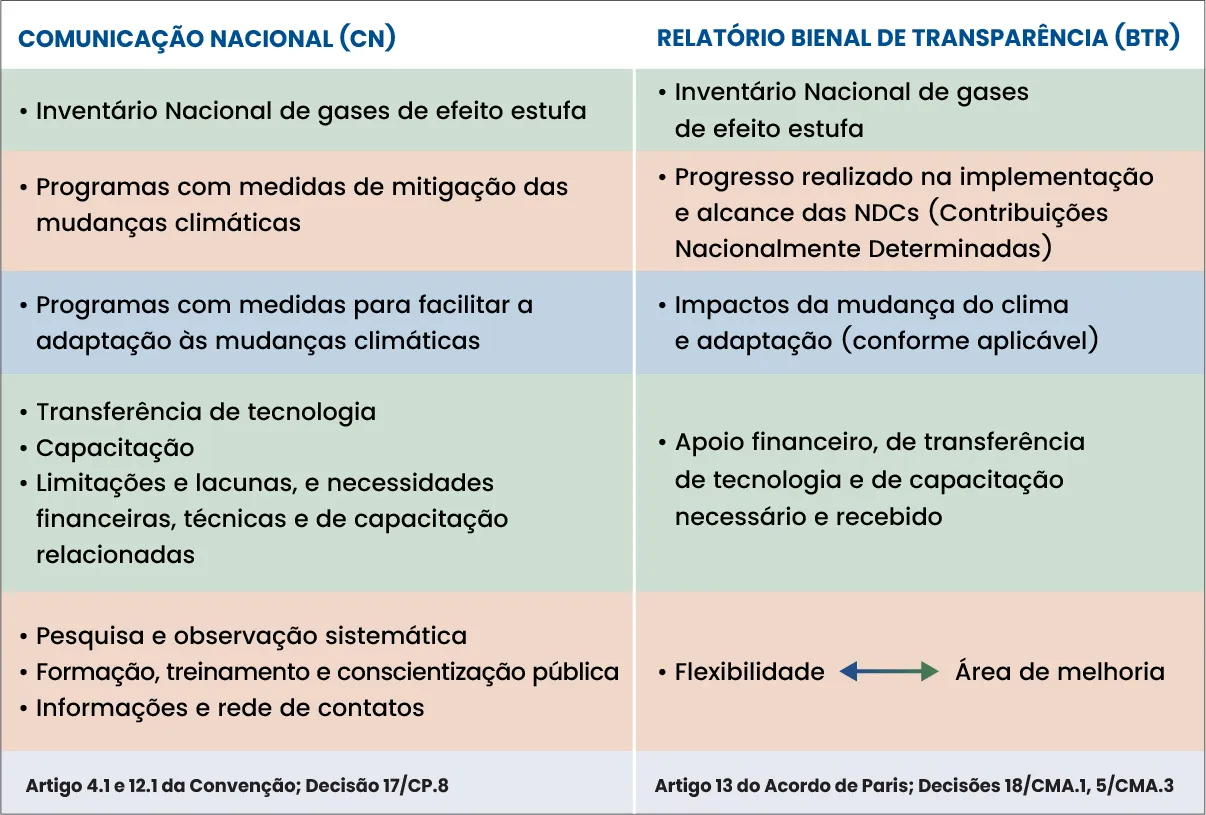
These are two reports with different roles. The National Communication has been required under the Climate Convention since the 1990s and covers the greenhouse gas inventory, mitigation and adaptation programs, research, capacity building and support needs. The Biennial Transparency Report (BTR) responds to the Enhanced Transparency Framework in Article 13 of the Paris Agreement, and Brazil has submitted it since 2024. It presents the inventory and progress in implementing the NDC, the country's climate target, as well as impacts, adaptation and the financial and technical support needed and received.
The document was prepared by MCTI with support from Ciência&Clima, an international technical cooperation project run by the ministry with support from the United Nations Development Programme (UNDP) and funding from the Global Environment Facility (GEF). Over three decades, according to MCTI, the project has supported five National Communications, five Biennial Update Reports and two Biennial Transparency Reports. The English version is already on the UNFCCC and MCTI websites, and a Portuguese version is expected soon.
What the inventory shows
The national inventory included in the document was released early by MCTI on November 11. Net emissions fell from 2.07 to 1.51 gigatonnes of CO₂ equivalent between 2022 and 2024, a reduction of 560 million tonnes. Compared with 2005, the NDC reference year, the drop is 41.6%. The full time series, which starts in 1990, was updated.
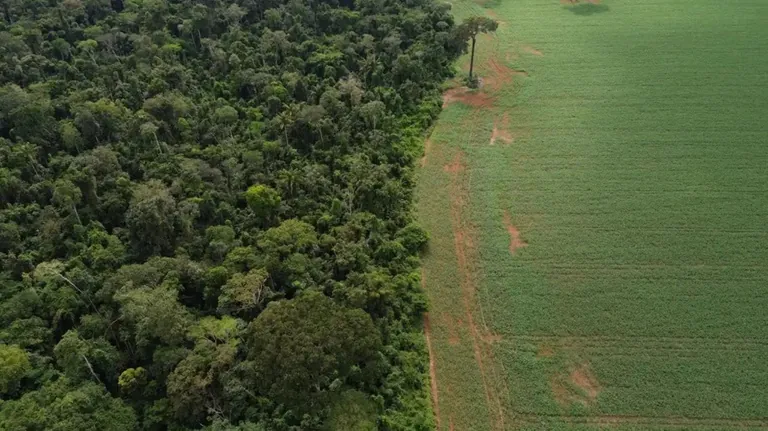
- Land use and forests (LULUCF): down 67%, from 867,993 to 285,636 thousand tonnes of CO₂ eq, driven by lower deforestation. In the Amazon, the deforested area fell 50%, from 13,200 km² to 6,625 km². The sector also accounted for 365,693 thousand tonnes of removals by native vegetation in protected areas, Indigenous Lands and rural properties with a completed CAR (rural environmental registry) review.
- Agriculture: 579,322 thousand tonnes in 2024, up 1.1%. Enteric fermentation in cattle accounts for 62% of the sector. Since 1990, enteric methane per kilo of beef carcass has fallen 58%.
- Energy: 426,906 thousand tonnes, up 2%, with transport at 52% of the sector. MCTI attributes the rise to coal-fired power in a dry year, fuel use in transport and the recovery of aviation.
- Industrial processes (IPPU): 108,602 thousand tonnes, up 2%, influenced by greater use of refrigerant gases.
- Waste: 109,325 thousand tonnes, up 7%. Landfills and dumps account for about 67% and wastewater treatment for 31%.
With lower deforestation, the sector shares changed. In 2024, agriculture accounted for 38.4% of emissions, energy for 28.3%, land use for 18.9%, and industrial processes and waste for 7.2% each. By gas, CO₂ fell 41.4% and methane 2.0%, while hydrofluorocarbons (HFCs) rose 13.9%.
Why the inventory stops at 2024
Paris Agreement reporting rules, which apply to all countries, allow a two-year gap between the last inventory year and the submission. That is why the report submitted in 2026 ends in 2024. Brazil's NDC sets a limit of 1.32 gigatonnes for 2025, about 190 million tonnes below the 2024 level, and that result will only appear in a future report. Detailed data are available in Sirene, the official emissions registry, and in the National Inventory Report, with methodology and emission factors.
What this means for companies and projects
The drop came from deforestation, and the other sectors rose. Agriculture, energy, industry and waste emitted more in 2024 than in 2022. With deforestation lower, these sectors carry more weight in the country's emissions and are likely to face more of the pressure to cut.
The official numbers are a reference. Corporate inventories, climate chapters in environmental studies and sustainability reports become more consistent when they use the same basis and emission factors as the national inventory, and explain any differences.
Refrigerant gases are on the radar. The inventory expanded the set of fluorinated gases it counts, and HFC emissions grew. Companies with large refrigeration and air-conditioning systems should look at this item.
The report is also a statement of commitment. Beyond the numbers, it shows what the country says it is doing to meet its NDC. That text helps anticipate policies, regulation and financing lines that will reach each sector.
Talk to KICK
KICK Group works on socio-environmental communication and stakeholder engagement for projects, from diagnosis and dialogue with communities to monitoring and reporting results. If your company needs to align its climate reporting with what Brazil reports to the UN, it is worth talking.
Write to contato@kickgroup.com.br. Sources: Ciência&Clima project (MCTI), including its announcement of the submission on November 17, 2026; MCTI, "Brazil cuts greenhouse gas emissions by 27% from 2022 to 2024" (November 11, 2026, in Portuguese); and MCTI at COP31 (November 13, 2026, in Portuguese). Images: MCTI. Informational text, updated to November 17, 2026. Figures come from the national inventory released by MCTI and should be checked against the full document.
Keep reading

KICK develops ESPM's first Sustainability Report
The report, with 2025 data, uses the GRI Standards as a reference and relates to MEC assessments, the Ethos Indicators and the SDGs. See how it was developed and what it shows.
Letter at COP31 calls for political leadership to end deforestation by 2030
More than one hundred organizations, Indigenous peoples and research institutions call for an implementation process through 2030 and an international meeting in 2027. See what the letter says, the COP30 Roadmap and what changes for companies.
The 10 new insights in climate science for 2026/2027
The Future Earth, The Earth League and WCRP report brings together the ten most urgent findings in climate research. See the summary and what each asks of companies, projects and licensing.