
Norway commits R$350 million to the Amazon Fund after deforestation drop
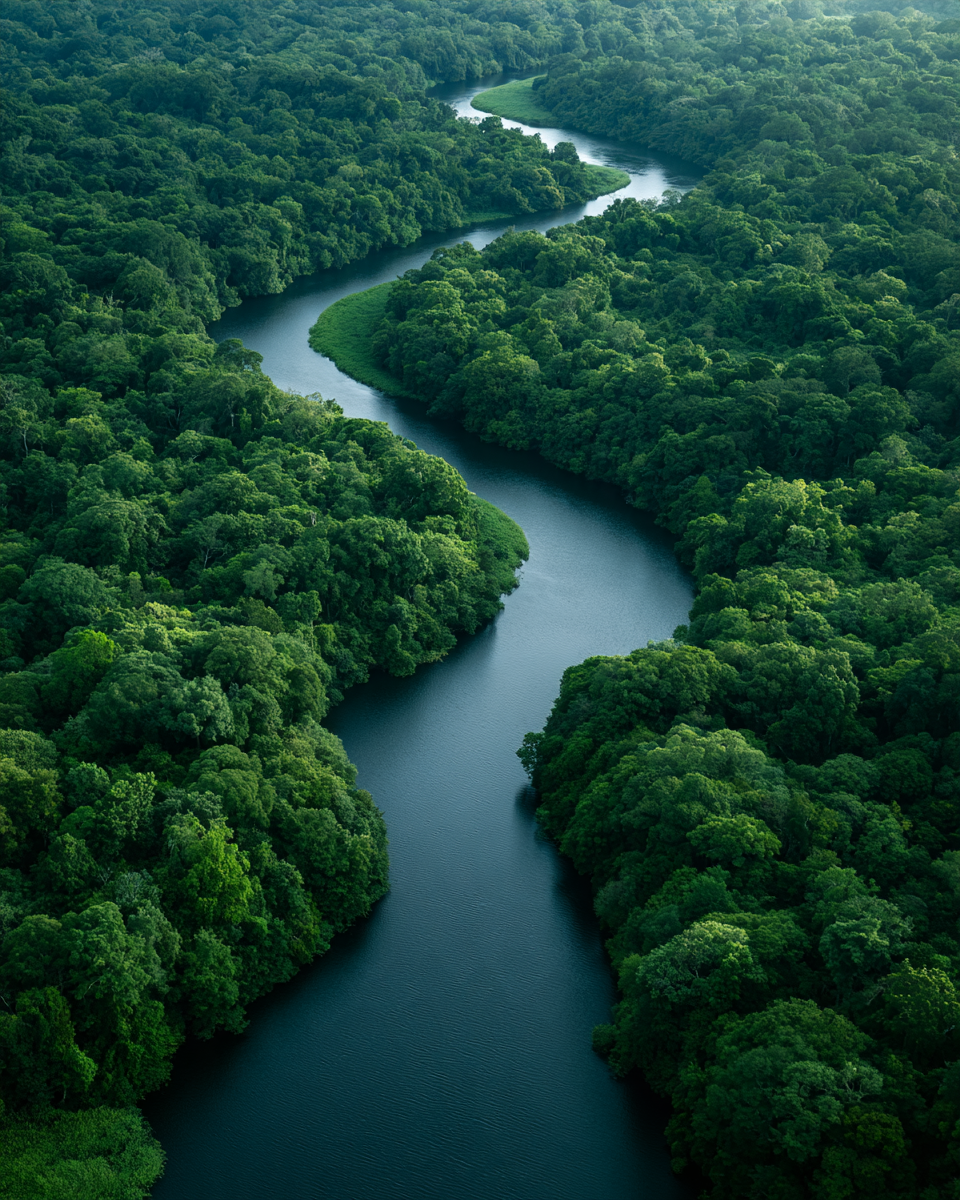
The Royal Norwegian Embassy in Brasília announced, on November 9, a new contribution of approximately R$350 million (NOK 600 million) to the Amazon Fund. According to the embassy's note (in Portuguese), the contribution is based on Brazil's results in reducing deforestation. The note cites Prodes data from INPE: in the 2024/2025 crop year, deforestation in the Amazon fell 41.8%, to 3,335 km², the lowest rate recorded since 1988, and the cumulative drop over the past four years is 70%. Payment will be made after final verification of results, expected by the end of the year. Norway's Minister of Climate and Environment, Sigrun Aasland, is quoted in the note saying the country is proud to be a long-term partner in this effort.
What the Amazon Fund is
The Fund was created by Decree No. 6,527 of August 1, 2008, and is managed by BNDES, which raises the donations and contracts and monitors the projects. Its purpose is to raise donations for non-reimbursable investments in preventing, monitoring and fighting deforestation and in conservation and sustainable use of the Legal Amazon. Areas of support include management of public forests and protected areas, environmental control and enforcement, sustainable forest management, economic activities based on sustainable use of vegetation, land-use planning and land tenure regularization, biodiversity conservation and recovery of deforested areas. Up to 20% of resources may support deforestation monitoring systems in other Brazilian biomes and in tropical countries.
The Fund works on payment for results. Donations are validated by the Amazon Fund Technical Committee (CTFA), based on the reduction in deforestation emissions calculated by the Ministry of the Environment, and BNDES issues donors diplomas that create no rights or credits of any kind. Application guidelines come from the Steering Committee (COFA), and the Norwegian note recalls that the donor does not decide which projects receive the funds. According to the Fund's portal, there are 156 supported projects, with R$5.97 billion in support and R$2.93 billion disbursed. Support is per project, with accountability reported to BNDES.
Who puts money in
Norway is the main donor. According to the Fund's donations page, with data through October 28, 2026, the internalized total is about R$5.29 billion, split as follows, in approximate values:
- Norway: R$3.80 billion, in 16 donations, between October 2009 and December 2025;
- United Kingdom: R$555 million;
- Germany: R$388 million (donations from 2010 to 2024);
- United States: R$291 million;
- Denmark: R$85 million;
- Ireland: R$61 million;
- Switzerland: R$48 million;
- European Union: R$31 million;
- Petrobras: R$17 million, in 29 donations, between 2011 and 2018;
- Japan: R$15 million.
Donors include governments of several countries, the European Union and a Brazilian company, Petrobras. The portal's figures are updated over time, and the page has small differences between its table and its text, so it is worth checking the exact value at the source before citing it.
Which calls the Fund has made, for how much and for whom
Support comes through structuring projects submitted directly or selected in public calls, run by the Fund itself or by partner institutions. The portal lists eleven calls, and the amounts below are those reported on each page.
- Amazon Challenges Program (2026). R$107 million, of which R$72 million from the Fund and R$35 million as counterpart from state research funding foundations. Aimed at research and innovation networks of scientific institutions, with 9 to 12 projects of up to R$8 million, for the açaí, Brazil nut, cocoa, babassu and fishery value chains.
- Prospera Amazônia (2026). Up to R$230 million, for civil society organizations and cooperatives, grouped in networks of at least five organizations, that set up sociobioeconomy development hubs in 9 territories of the Legal Amazon.
- Sanear Indígena (2026). R$150 million, for civil society organizations, in five lots in Acre, Amazonas and Pará, with water access for 20,836 Indigenous people in 351 villages.
- Forests and Communities: Amazônia Viva, with Conab (2026). R$96 million, of which R$80 million non-reimbursable, for at least 32 projects of R$500,000 to R$2.5 million from family-farming organizations and cooperatives in the Legal Amazon.
- Quilombola Natures (2024). Selection of a managing partner, in the Seeds category, up to R$3 million, and the Roots category, up to R$30 million, for territorial and environmental management of quilombola territories.
- Sanear Amazônia (2024). Up to R$150 million, in seven lots across five states, with drinking water for 4,626 families in conservation units, quilombola communities and agro-extractive settlements.
- Amazon in School (2023). Up to R$336 million, with up to ten proposals, for healthy and sustainable school meals with family farming. It received 58 proposals.
- Restaura Amazônia (2023). Up to R$450 million, with three managing partners, IBAM, FBDS and Conservation International Brazil, for ecological restoration in three macro-regions.
- Sustainable and inclusive value chains (2017). R$150 million planned, with six selected projects of about R$133 million.
- Support for Territorial and Environmental Management Plans, the PGTAs (2014). For Indigenous organizations and other nonprofits with experience with Indigenous and traditional peoples, with nine selected projects.
- Sustainable productive projects (2012). A 2012 call, not detailed here.
The four 2026 calls are marked as new on the portal, and the page does not give each one's application deadline. Anyone wishing to compete should check the call notice.
The role of those who execute
Part of the money reaches the territory through organizations that execute projects supported by the Fund and, in turn, open local selections. That is the case of the Sustainable Amazon Foundation (FAS), whose page on the Amazon Fund describes projects such as Prospera na Floresta, on sociobioeconomy and income generation, and Pirão no Prato, on fishing and food security. In the FAS calls, the notices tied to the Fund are the Community-Based Sustainable Tourism call (2026), with 30 ventures, seed capital of up to R$23,000 and acceleration capital of up to R$50,000, in conservation units in Amazonas, and Solutions from the Territory (2026), with R$1.25 million for five projects by organizations on Indigenous lands in Amazonas. Between 2017 and 2019, the Floresta em Pé call, also funded by the Fund, passed R$2.5 million to 17 projects in 12 municipalities in Amazonas. FAS calls are offshoots of the projects, not calls of the Fund itself.
Has Norway done this before?
Yes, and it is most of the Fund's history. The partnership began in 2008, with the Amazon Fund on the Brazilian side and the International Climate and Forest Initiative on the Norwegian side. The first recorded donation is from October 2009, of R$36 million. In all, there are 16 donations and R$3.8 billion (about NOK 9.4 billion), with a contract running to 2035. Donations were suspended during Jair Bolsonaro's government, according to the press, and the Fund's record shows that after December 2018 the next donation appears in July 2024. In 2023, Norway announced US$50 million at COP28, and the December 2025 donation, the most recent, was R$335 million.
The other case, on a larger scale, is the Tropical Forest Forever Facility (TFFF), launched at COP30 in Belém. On November 6, 2025, Norway announced US$3 billion over ten years, the largest allocation to the fund, with conditions: according to the press, full payment depends on the fund mobilizing at least US$10 billion by the end of 2026, and Norway cannot account for more than 20% of the total. The TFFF is not a Brazilian fund in the strict sense, and Brazil was its champion. In the sources consulted, the Amazon Fund and the TFFF are the two major Norwegian vehicles tied to Brazil. We found no information here on other Brazilian funds with Norwegian contributions.
What this means for those working in the territory
The announcement shows a pattern: money comes after the result and reaches the territory through organizations that account to the managing bank, with reports, indicators and audits at each stage. Those who want to compete for calls like those of 2026 need a formalized organization, a network of partners, reliable data on the territory and the capacity to report results. There is also the dimension of dialogue: projects on Indigenous lands, in conservation units and in quilombola communities depend on consultation, clear communication and feedback to communities. The note itself acknowledges that illegal logging, illegal mining, fires and agricultural expansion remain threats, and these results depend on those in the territory.
Talk to KICK
KICK Group works on socio-environmental communication and stakeholder engagement, from mapping and dialogue with communities to monitoring and reporting results. If your organization or company wants to structure a project to compete for socio-environmental fund resources, it is worth talking.
Write to contato@kickgroup.com.br. Sources: Norwegian Embassy in Brazil (11/9/2026), Amazon Fund, donations, public calls, FAS and Poder360, on the TFFF (Portuguese sources). Informational text, updated as of November 9, 2026. Amounts, deadlines and conditions change and must be confirmed at the sources.
Keep reading
Green Climate Fund announces US$1 billion for 14 Pacific countries: what is at stake
Marie-Ange Saraka-Yao announced in Perth a pipeline of climate investments with 14 Pacific countries, later approved. Understand the numbers, the programme design and what it says about climate finance.
Climate and nature scenarios enter the agenda of finance ministries
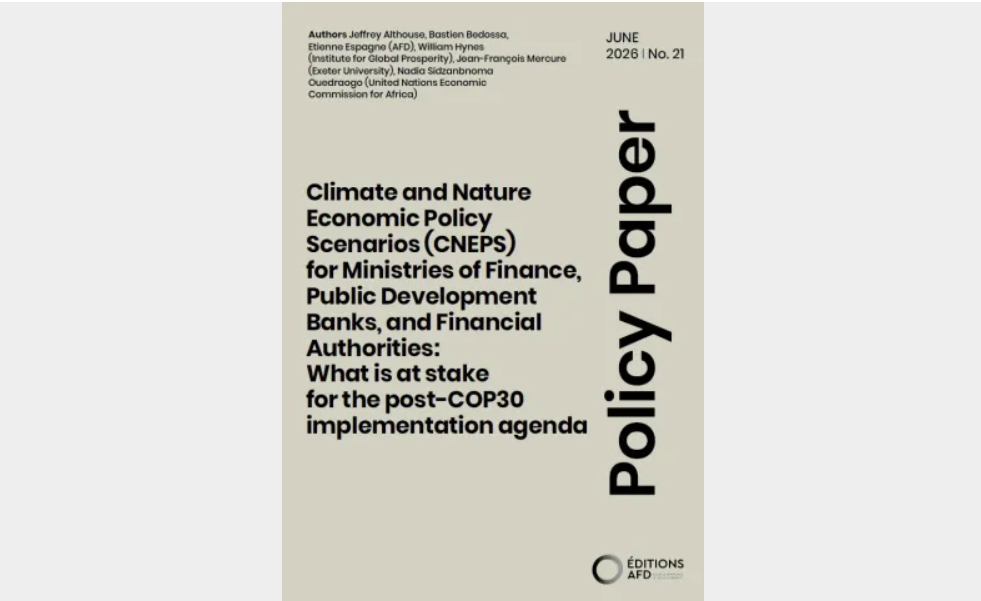
An AFD paper proposes that finance ministries and development banks build their own climate and nature scenarios. See what it says, the six recommendations and what changes for investors.

KICK develops ESPM's first Sustainability Report
The report, with 2025 data, uses the GRI Standards as a reference and relates to MEC assessments, the Ethos Indicators and the SDGs. See how it was developed and what it shows.