

Community conflicts in energy projects: what five cases teach and how to avoid a crisis
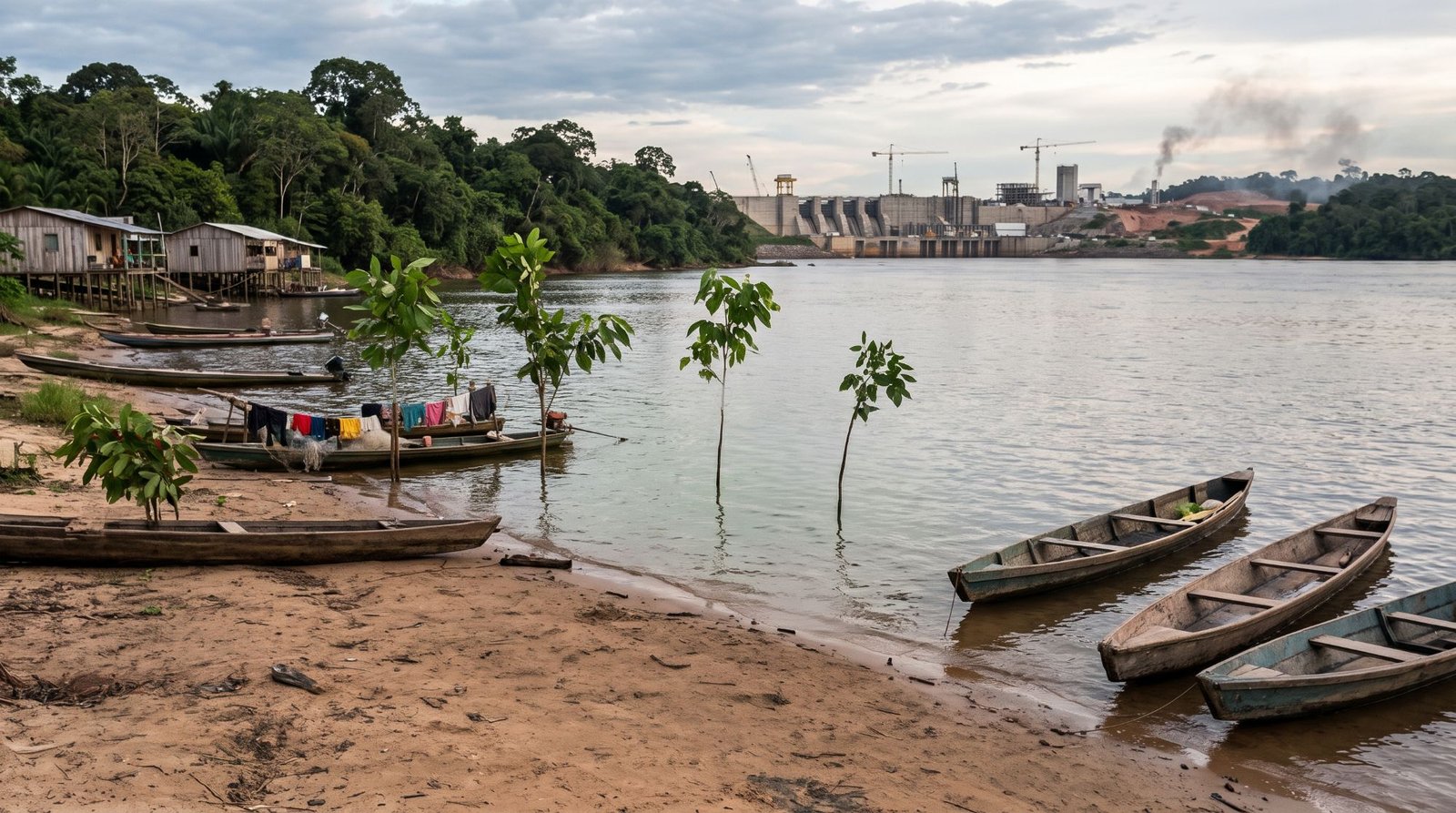
Holding an environmental license does not mean having the territory's acceptance. In energy projects, recent history shows that works can be halted, licenses annulled and financing withdrawn when affected communities were not heard in time and in an appropriate way, even when the project complied with what licensing formally required.
Below are five cases, in Brazil and abroad, with their sources, and what they indicate about the value of investing in stakeholder mapping, consultation and community relations before conflict appears.
The cost of a crisis with communities
A socio-environmental conflict is rarely just a communication problem. It tends to produce cumulative effects:
- delays and interruptions to works and operations, with fixed costs that keep running;
- legal, security and crisis management expenses, plus staff and executive time diverted from the business;
- more expensive or lost financing, as banks and investors reassess risk;
- damage to the image with customers, investors, public bodies and the surrounding population itself;
- regulatory uncertainty, with licenses challenged in court or reviewed by the competent bodies.
Five cases that show the pattern
Dakota Access (United States): when opposition grows without being heard
The Dakota Access pipeline faced three years of opposition from the Standing Rock Sioux Tribe, which raised concerns about water contamination and sacred sites. A University of Colorado study (Fredericks and Meaney), released in 2018, estimated the project's total cost at at least US$7.5 billion, nearly double the roughly US$3.8 billion originally planned. According to the same study, the financing banks lost about US$4.4 billion through account closures and withdrawals by municipalities, and the company's shares lost about 20% of their value over the period. The authors argue that consultation with the tribe was not meaningful and that relying only on legal compliance, without observing international human rights standards, contributed to the losses. These figures come from a single study and should be read with that in mind. DeSmog summarizes the findings.
Fosen (Norway): the valid license that stopped being valid
The Fosen wind complex, with 151 turbines, cost about 1.1 billion euros and was built between 2018 and 2020. On October 11, 2021, Norway's Supreme Court ruled unanimously that two of the farms violated the cultural rights of Sámi reindeer herders, based on Article 27 of the International Covenant on Civil and Political Rights. The Court declared the licenses and expropriations invalid, although it did not order the turbines removed.
The outcome took years. The turbines kept operating, there were protests and occupations of ministries in Oslo in 2023, the government apologized, and agreements with the Sámi communities were only signed in December 2023 and March 2024, with annual payments for 25 years and a veto over future renewals. According to The Northern Voices, the replacement pasture promised by the State had still not been delivered. The case shows that formal compliance with the licensing process does not remove the risk when community rights are affected.
Mareña Renovables (Mexico): the project that never left the drawing board
In the Isthmus of Tehuantepec, in Oaxaca, the Mareña Renovables wind project, partly financed by the Inter-American Development Bank (IDB), faced road blockades and opposition from Ikoots communities. Sources differ on the financing amount (between US$72 and US$75 million). Critics pointed to flaws in the consultation of communities and allegations of side deals. The project was cancelled in early 2014, as recorded by La Jornada (in Spanish), and NACLA/Americas.org describes the local resistance. The investors repositioned the project on another site, where it faced similar opposition.
São Luiz do Tapajós (Brazil): a study that did not cover the territory
On August 4, 2016, Ibama archived the licensing of the São Luiz do Tapajós hydroelectric plant, in Pará, following a technical opinion from Funai and a recommendation from the Federal Public Prosecutor's Office. The project would have flooded part of the Sawré Muybu Indigenous Land, of the Munduruku people. The environmental agency found that the environmental impact study lacked the content needed to assess viability, and the review request filed by Eletrobras was denied, according to Agência Brasil (in Portuguese). Years of studies and investment were left without a result, and the plant was never built.
Canudos Wind Complex (Bahia): recommendations that were not followed
In 2019, fundo e fecho de pasto communities (traditional communities that use land collectively) approached the Bahia Public Prosecutor's Office over concerns about the impacts of a wind complex in the Raso da Catarina region. In 2021, the prosecutors recommended that the state agency and the company review the licensing, carry out the required studies and public hearings and consult the affected traditional communities in advance, but the recommendations were not followed. In March 2023, the federal and state prosecutors filed a public civil action seeking suspension and annulment of the licenses. The Brasil de Fato report (in Portuguese) details the case. The episode illustrates the cost of postponing dialogue: a discussion that could have been settled at the planning stage reached the courts with the project already under way.
What these cases have in common
In all five, there were signs before the crisis. Communities had spoken up, agencies had warned and concerns could have been built into the project. In every case, the path chosen prioritized meeting the formal rite rather than building a relationship with the territory. The result was the same: works halted or cancelled, licenses challenged, lenders pulling away and a damaged image.
Going beyond the EIA and what the regulator requires
The environmental impact study and the licensing agency's requirements are the floor, not the ceiling. They often fail to capture who actually lives and works in the territory, such as traditional communities, collectives and local organizations that do not appear in official registries. To reduce risk, companies can adopt, from the planning stage:
- stakeholder mapping, identifying who the actors are, how they are organized, what they demand and which relationships already exist among them;
- continuous consultation and dialogue, with language and channels suited to each audience, and not only one-off hearings;
- a communication and relations plan, with defined owners and tracked goals;
- a mechanism for receiving and handling complaints, with response deadlines;
- incorporating contributions into the project, with feedback to communities on what was or was not accepted and why;
- monitoring of the social environment throughout the project's life cycle.
This work is also a response to growing demands from banks and investors, who assess social risks and the so-called social license to operate.
KICK's experience
KICK Group recently carried out the stakeholder mapping for the PCH Braço small hydropower plant and the communication plan for traditional communities and the Coletivo de Fortalecimento e Empoderamento da População Negra do Sul do Espírito Santo (FEPNES), for Porto Central. In both works, the starting point is to go beyond the list of stakeholders in the licensing documents and understand the territory, its actors and the forms of communication that work for each group, so that dialogue begins before conflict exists.
Is your project prepared?
- Do we know all the groups that live, work or depend on the project's territory, including those not in the official studies?
- Were communities heard in an appropriate language and format, and before the main decisions?
- Is there a complaints channel with defined response times and an owner?
- Did what was heard in consultations reach the project, and did communities know it?
- Would banks, insurers and investors feel secure about what we have documented on our relationship with the territory?
Talk to KICK
KICK Group supports energy, infrastructure and other projects with stakeholder mapping, communication and community relations plans and social risk analysis. Get in touch to talk about your project.
Write to contato@kickgroup.com.br. Sources cited: DeSmog, The Northern Voices, La Jornada, Americas.org, Agência Brasil and Brasil de Fato. The cases were described from public reports and studies, and the amounts cited reflect the sources indicated.