

Climate adaptation in Brazil: what the FGVces and iCS briefs show about gaps and opportunities
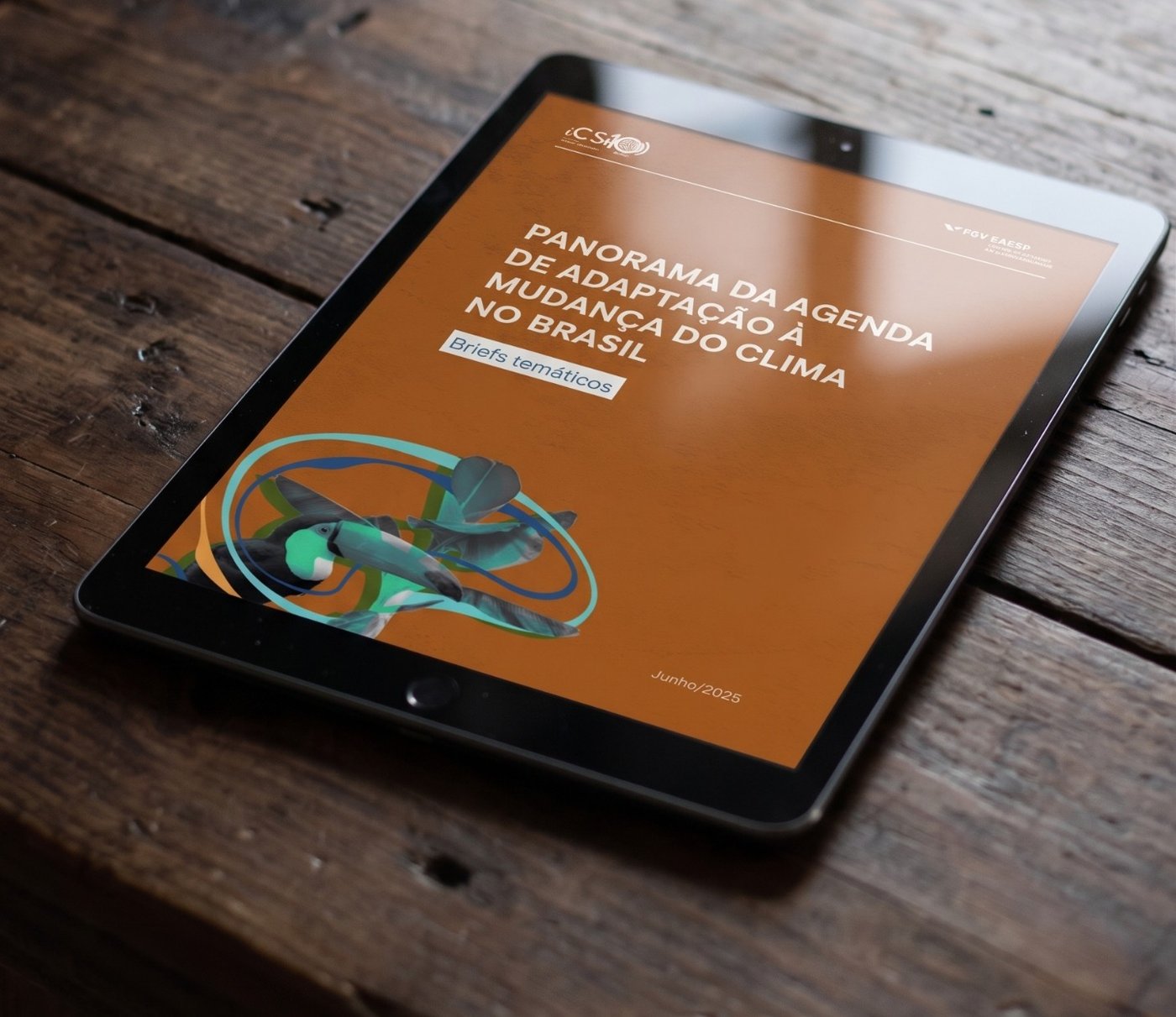
While much of the climate debate focuses on cutting emissions, the impacts of climate change are already being felt in Brazilian cities, farms, hospitals and supply chains. That is where a material released in June 2025 by the Center for Sustainability Studies of Fundação Getulio Vargas (FGVces), in partnership with the Climate and Society Institute (iCS), becomes relevant: the Overview of the Climate Change Adaptation Agenda in Brazil (in Portuguese), in the form of thematic briefs.
What the material is
The document gathers five briefs that expand on the findings of a broader study on gaps and opportunities for philanthropy in the adaptation agenda. The question guiding the study is how philanthropy can generate the greatest possible positive impact on the country's adaptation in the short, medium and long term. According to the material itself, the research combined a review of 47 scientific and technical references with interviews with seven experts and key informants, and considered eight themes: finance, infrastructure, energy, food systems, industry, health, loss and damage, and climate justice. The published briefs cover five of them:
- finance for adaptation and resilience;
- resilient infrastructure;
- climate justice;
- adaptation and resilience in health;
- adaptation and resilience of food systems.
For each theme, the material describes the context, the main gaps found and the opportunities for action, indicating what to do and how.
Why it matters
The study starts from a finding: adaptation still receives less attention and fewer resources than mitigation. Between 2013 and 2022, socio-environmental disasters hit 91.7% of Brazilian municipalities, according to data from the Ministry of Integration and Regional Development cited in the material, and events such as the 2024 storms in Rio Grande do Sul showed how extreme rainfall affects housing, water, energy, food and the economy at the same time.
By mapping where resources and capacities are lacking, the material offers a roadmap that serves philanthropy, but also companies, governments and civil society organizations that need to understand the physical risks of climate and prioritize action.
Main findings by theme
Finance
Between 2015 and 2020, the agricultural sector received, on average, R$15.1 billion per year in mapped climate finance, equivalent to 60% of the flows identified, with a strong weight of rural credit. The study points to little transparency and few guidelines for allocating funds, to existing instruments, such as ESG investment funds regulated by the CVM and sovereign sustainable bonds, being underused, and to international resources taking a long time to reach territories. It also highlights the shortage of professionals trained in climate and sustainability, especially in small and medium-sized companies and municipalities.
Resilient infrastructure
The material shows that infrastructure financing is concentrated in mitigation projects, with little climate risk analysis, and that housing programs and urban planning instruments rarely incorporate this lens. It cites a deficit of about 5.8 million homes, plus another 24.8 million households with some kind of infrastructure inadequacy. It recommends creating technical criteria that consider current and projected climate in tenders and regulations, and including urban infrastructure in the discussion of the Brazilian Sustainable Taxonomy.
Climate justice
The impacts of the climate crisis are unequal, and the most affected groups, such as peripheral communities, Indigenous peoples, quilombolas and small farmers, are under-represented in the spaces where policies are decided. The brief points to unequal access to financing, fragmentation between science, public policy and traditional knowledge, and the need for social participation mechanisms. One of the opportunities is to create non-reimbursable funding lines for adaptation pre-projects in priority territories, allowing municipalities and local organizations to access resources already available in later phases.
Health
Although health is a priority in 59% of the Nationally Determined Contributions that address adaptation, only 0.5% of multilateral climate finance goes to projects in the area, according to the data cited. The study also records the spread of vector-borne diseases, such as dengue and malaria, and gaps in monitoring, budget and health organizations' access to climate finance. Brazil's NDC released in November 2024 began to include health among the national adaptation objectives.
Food systems
The food system receives about 3% of climate finance resources, according to the source cited in the material. The gaps include low adoption of agroecological practices, lack of climate information for small producers, the vulnerability of supply centers and the inadequacy of rural insurance for family farming. Projections from the AdaptaBrasil platform indicate a trend of falling production of grains, eggs, milk and meat in the short term.
What the study proposes
The recommendations are organized into categories of action: advocacy, knowledge production and dissemination, policies, methodologies and tools, managerial and technical capacities, and strengthening the system of actors. In several themes, proposals include accessible guides on financing sources, courses and mentoring for preparing bankable projects, open databases, territorial coalitions with public and private resources, and community participation in defining solutions.
What this means for companies and organizations
Although the study is addressed to philanthropy, its findings speak directly to the ESG agenda and to companies' risk management:
- physical climate risks, such as floods, droughts and heat waves, affect operations, assets, suppliers and employees, and should be part of risk analysis and reporting, including under IFRS S2;
- infrastructure and asset location need to consider the projected climate, not just the historical one;
- the value chain, especially in food and agriculture, depends on small producers with lower adaptive capacity;
- adaptation projects with community participation tend to be more robust and reduce conflicts;
- the private sector is called on to act in territorial coalitions and to mobilize resources complementary to those of the public sector;
- those who organize data, indicators and projects are better placed to access financing.
How to access it
The full material is available, as a PDF, on the Climate and Society Institute website. It was prepared by FGVces, with funding and technical partnership from iCS, and includes the credits and bibliography of each brief.
Questions for your organization
- Which physical climate risks have already affected or could affect our operation and value chain?
- Does the risk analysis consider the climate projected for the coming years?
- Do we know the surrounding communities and territories and their vulnerability?
- Do we have projects and data organized to access financing or form adaptation partnerships?
Talk to KICK
KICK Group supports companies and organizations in risk analysis, materiality, stakeholder mapping, structuring indicators and ESG reporting, including through the B.KICK platform. Get in touch to talk about how the adaptation agenda applies to your business.
Write to contato@kickgroup.com.br. Source: Overview of the Climate Change Adaptation Agenda in Brazil: thematic briefs (in Portuguese), FGVces and Climate and Society Institute, June 2025. The figures cited reflect the sources indicated in the original material.